The film shows forced maturity through abduction and violence. Ezra takes us into the psychological depth of the character of a boy who is taken from a normal school day into a military troop committing atrocious actions. The violence forces Ezra to become a ruthless soldier. When he gets kidnapped, he is forced to adjust to the environment, which shapes his sense of morals. Now that he has suffered from a heartbreaking history, he can't go back to the past and be an innocent young boy. Ezra tells us that war makes people die mentally, not only physically.
The main character can't fully remember or explain what happened to him, which reflects how his life was shaped by violence and trauma rather than personal choice. Ezra struggles with his past as a child soldier and tries to return to a normal life; however, his growth seems to go back and forth, like how the film takes us back and forth from the present day to the past. This depiction of growth differs from the general chronicle of character maturation seen in most Western coming-of-age films. Usually in a Bildungsroman, the story ends with success or a broadened sight; however, Ezra deviates from that structure and ends with a main character realizing a horrible truth about his past. Because of this trauma, there is no clear resolution. The future is uncertain.
(Maya, Haeun, Joohee, Nawoo, Sinbi, Soojin, Yuna)
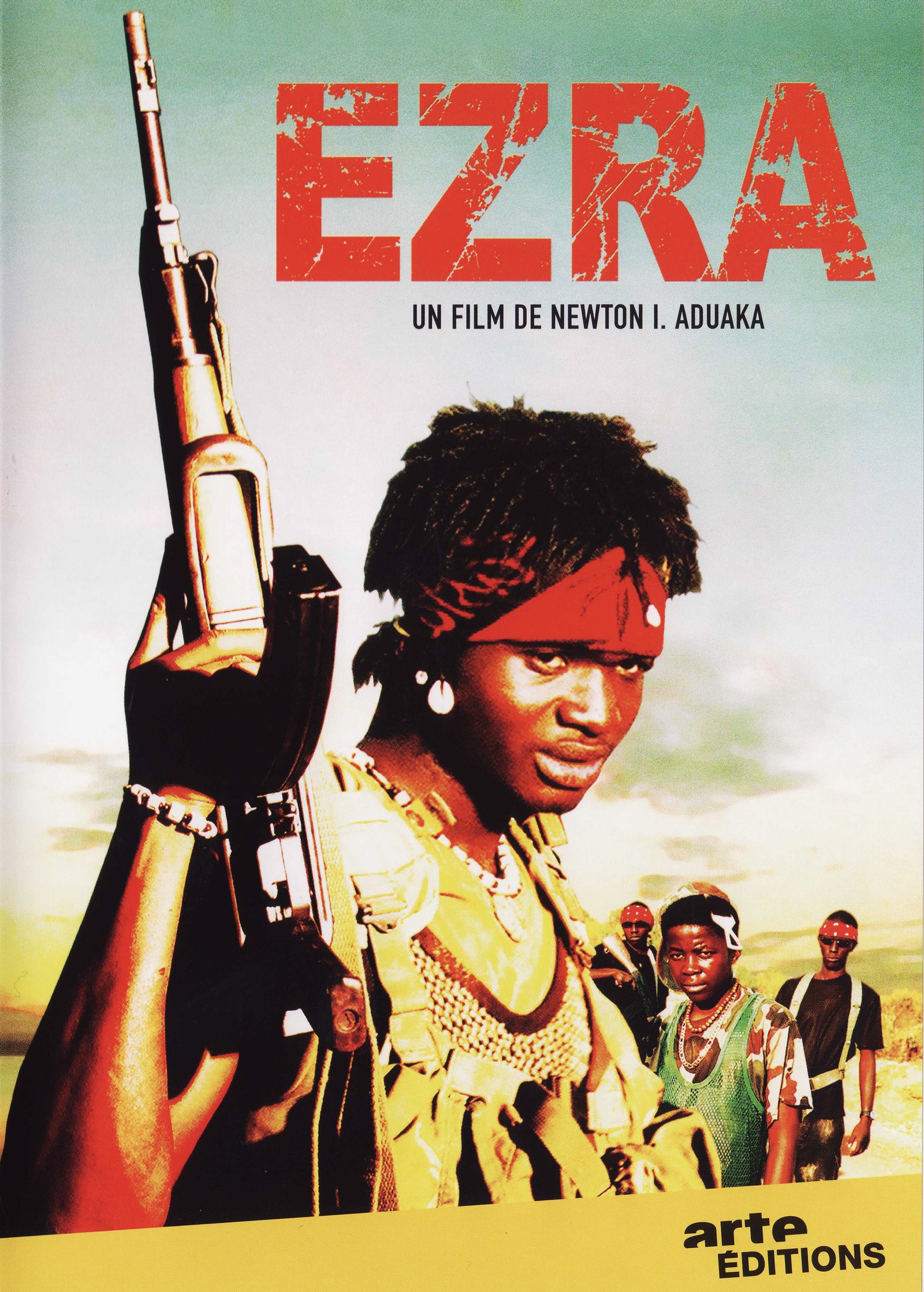
Theatrical poster
"Ezra can't fully remember or explain what happened to him, which reflects how his life was shaped by violence and trauma rather than personal choice."
— Joohee Kim
"Ezra tells us that war makes people die mentally, not only physically."
— Soojin Lee
A note on this essay: The collective response above was assembled from individual student journal entries written immediately after the screening. Entries were compiled and edited using AI to eliminate repetition, preserve disagreement, and honor each student's voice — reducing the total word count by 75%. The writing remains the students' own.