Hour of the Furnaces shows the strength of people forced into new systems of oppression as a result of neocolonialism. It includes data, statistics, and percentages, showing the cruel and violent events that happened in post-colonial Argentina. The most present emotion one feels while watching Hour of the Furnaces is disturbance and discomfort. The film has a very strong, set perspective on neocolonialism, meant to make audiences uncomfortable by uncovering and showing the truth about what was happening at the time, while handling meaningful topics like classism, anti-capitalism, colonization, and oligarchy.
The film starts with random scenes and narrations cut with texts that put the viewer off guard, utilizing a unique filming style that pairs images different to the sound. The visual montages juxtapose the wealthier Latin American and the rest. The indigenous are dying of hunger and lack of basic needs while the people of Buenos Aires are dancing through a party, drinking their joy away. These visuals show a back and forth between the people killed in the revolution and the "happy" people benefiting from continued war, illustrating the cruel nature behind those scenes of "happiness." One particular line of narration during a sequence with people at a party dancing over music is: "I am a citizen of the world, happy…" This leads to personal questions: "Am I a citizen of my country or the entire world?" "Would my answer be different if I came from a marginalized community?" The film portrays Westernization and Neocolonialism in an almost comical way, arguing that those who consume the products are responsible for the outcomes of neocolonialism — making one think about what is at stake as the developing world accepts help from other countries.
Specific images are disturbing and eye-opening. A scene that stood out was where the director put the camera on everyday people while they looked at the camera angrily or tried to avoid it. In another sequence, animals are shown being slaughtered. At the end, when they showed Ernesto Che Guevara dead for about three minutes, it leaves the viewer on the edge of their seat wanting to know what happened. It makes the heart feel heavy.
Note: Those who understand Spanish will be able to more fully grasp the emotions that are often lost in translation of captions.
(Haeun, Sally, Sinbi, Jeonju, Lilo, Samuel)
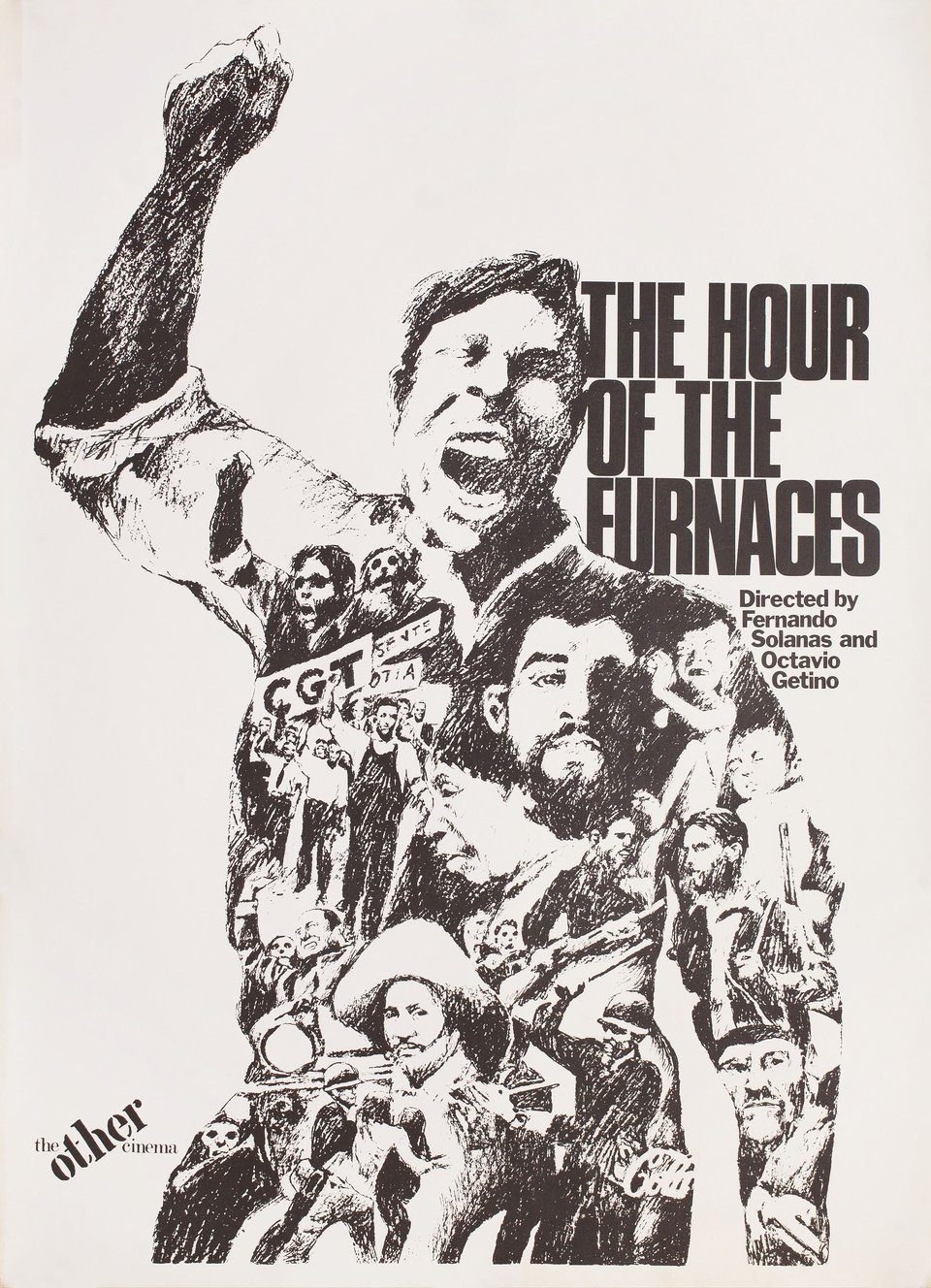
Theatrical poster
"In the film, we see the indigenous are dying of hunger and lack of basic needs while the people of Buenos Aires are dancing through a party."
— Sinbi Kim
"Lots of visual montages show a back and forth between the people killed in the revolution and the happy people benefiting from continued war."
— Jeonju Seo
"What I loved about La Hora de los Hornos was the filming style. I loved how it would use images different to the sound. The images were disturbing and eye opening. You can tell the film was meant to make people uncomfortable by uncovering and showing the truth about what was happening, and the topics were meaningful: classism, anti-capitalism, colonization, oligarchy."
— Lilo Tuiono
A note on this essay: The collective response above was assembled from individual student journal entries written immediately after the screening. Entries were compiled and edited using AI to eliminate repetition, preserve disagreement, and honor each student's voice — reducing the total word count by 75%. The writing remains the students' own.