In No Man's Land, the absurdity of war is shown in a way that is very clear. Two enemy soldiers are stuck together in the same trench and cannot escape. The situation makes the war feel meaningless and highlights the hopelessness and loss of control and outcome for both sides. The two opposing soldiers even talk about how they met the same girl, which makes the audience question how they became enemies. How ironic it is for two opposing soldiers to ask "Who started the war?" and "Who's the bad one?" while they kill each other.
The two characters are forced to choose whether to be a human or be the kind of person that the war has made them, selfish. They take turns being in "power" and they use that power to control what the other person does.
No Man's Land gives us a feeling of losing purpose for what a war is about. The main theme of the movie is the romanticization of peace, alongside the fragility of hope. The film is also an accurate portrayal of how the news and media often disregard actual people and focus solely on events and action. It leaves us wondering just how much information is hidden regarding war and conflict.
One haunting image is the ending shot of Cera all alone in the trench. It is memorable because the trench was once filled with people.
(Maya, Joohee, Sally, Sinbi, Jeonju, Michelle, Crist, Samuel)
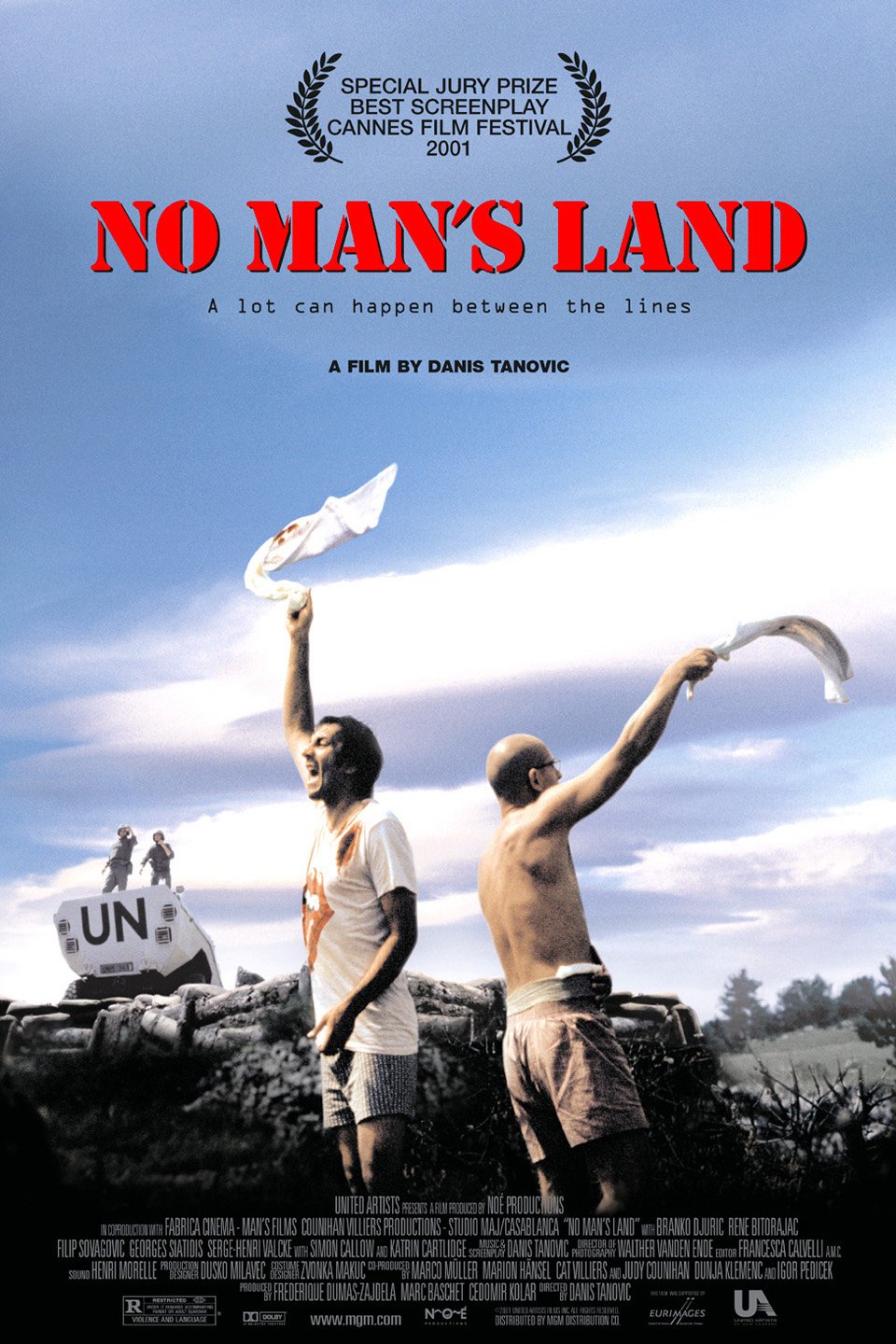
Theatrical poster
"No Man's Land is an accurate portrayal of how the news and media often disregard actual people and focus solely on events/action."
— Maya Calkins
"The main theme of the movie is the romanticization of peace."
— Jeonju Seo
A note on this essay: The collective response above was assembled from individual student journal entries written immediately after the screening. Entries were compiled and edited using AI to eliminate repetition, preserve disagreement, and honor each student's voice — reducing the total word count by 75%. The writing remains the students' own.